
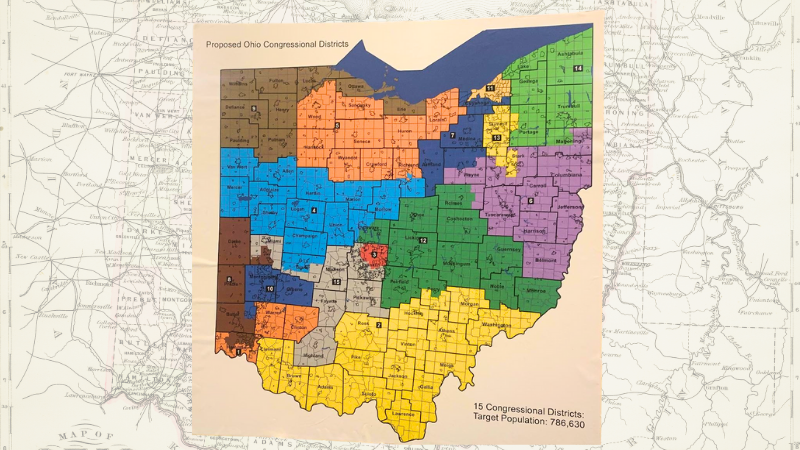
We officially have Congressional District maps that will determine representation in Ohio until 2032. Yet Ohio continues to fight for fair district maps. Redistricting typically happens every 10 years following the census, but in Ohio, we are in the map making process again – only 5 years later.
In 2015 and 2018, Ohio voters overwhelmingly supported ballot initiatives to change our redistricting process. Both reforms aimed to create transparent, bipartisan maps that keep communities together. Yet in 2021, this proved more difficult than imagined.
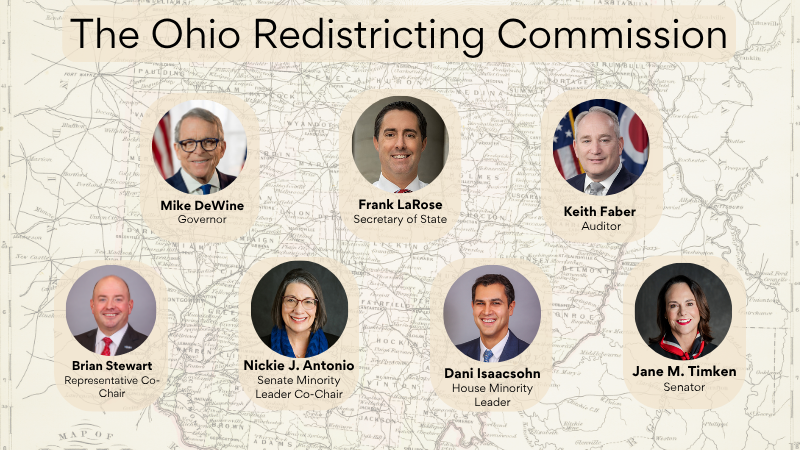
The bipartisan redistricting commission is made up of seven members: The Governor, The Secretary of State, The Auditor, and one Senate and House representative from each party.
In theory, the reforms we voted on in 2015 and 2018 should have created 10 year bipartisan maps. But the process has proven difficult to navigate. The Ohio General Assembly is the first stop for our district maps. Once they propose a map, and it has two public hearings, it is up for a vote. If it has a bipartisan vote in favor, those would be the maps until 2032. This did not happen by the September 30th deadline.
The second stop for our district maps is the Ohio Redistricting Commission. They are tasked with drawing a new map, holding public hearings, and having a vote among its seven members. For a district map to be considered bipartisan among this commission, it must receive at least two affirmative votes from each political party. With this year’s commission, that means that both Senator Antonio and Representative Isaacsohn have to vote in favor, along with two other members of the commission. The deadline for this second stop was October 31.
Leading up to the deadline, it was not looking good for Ohioans. The commission could not agree on rules for their meetings, let alone the district maps themselves. Democrats on the commission proposed a map that would likely result in 8 Republican and 7 Democrat Representatives in Congress. This map failed to meet bipartisan requirements. Republican members held their proposed map until 4pm on October 30, the day before the Commission’s deadline.
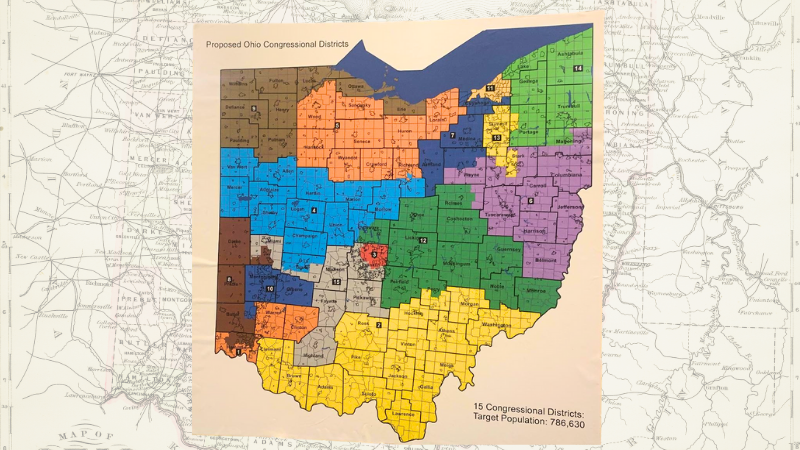
After a contentious hearing on the 30th, and again the morning of the 31st, the Commission cast their votes on the Republican-proposed map that would yield 12 Republican and 3 Democrat Congressional Representatives. The map passed unanimously.
Countless testimonies against the proposed map argued that it is not proportionally representative of Ohioans across the state. We need a new redistricting process, need to prioritize keeping cities and counties whole in our congressional districts, and need to honor the spirit of the constitutional amendments Ohio Voters passed in 2015 and 2018 to end gerrymandering in our state.
Our redistricting process is broken. By leaving it in the hands of partisan elected officials, we are stuck in a partisan loop that leads to unconstitutional and disproportional maps. These districts simply do not follow the rules that an overwhelming majority of Ohioans set in place in our 2015 and 2018 elections. Last year, in 2024, a ballot initiative to change the process failed during the November general election.
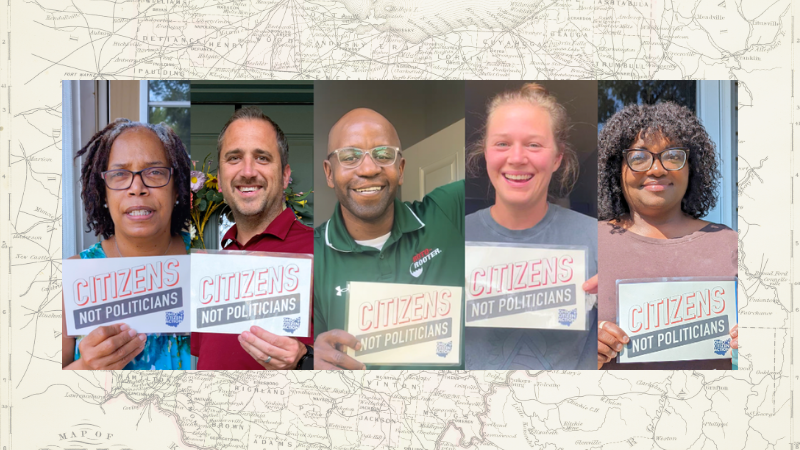 The 2024 Citizens Not Politicians citizen-led ballot initiative gave voters the chance to pass a constitutional amendment that would change our redistricting process. The proposed structural shift would have given power to citizens, rather than politicians who stand to gain from district maps drawn a certain way. The 2024 initiative ultimately failed on the ballot with distorted and confusing ballot language written by some of the Ohio politicians who stood to benefit the most from gerrymandered districts. The 2024 measure would have replaced the current process with a nonpartisan independent commission charged with drawing district maps, similar to what has been done in Michigan.
Just because achieving truly fair maps would be difficult, does not mean it is impossible. Ohio Citizen Action has and will continue to fight to hold politicians accountable in our state. What this looks like for redistricting remains to be seen. But we do know that Ohioans deserve fair representation that is not marred by partisan politicking.